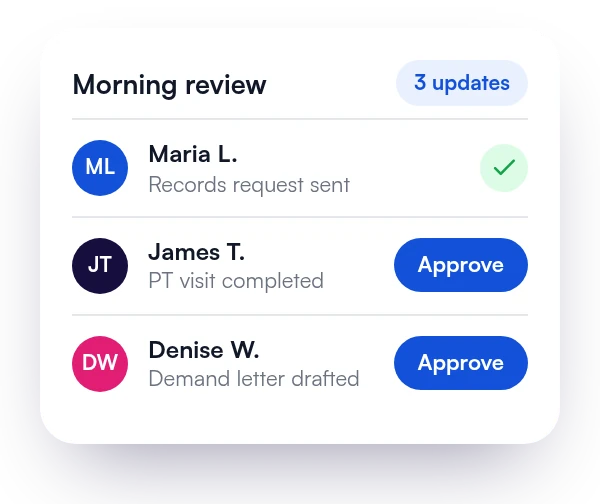
By the time of a deposition or demand, clients struggle to remember what they went through in any detail.
Pain, sleep, missed work and missed moments, recorded the day they happened, in the client's own words.
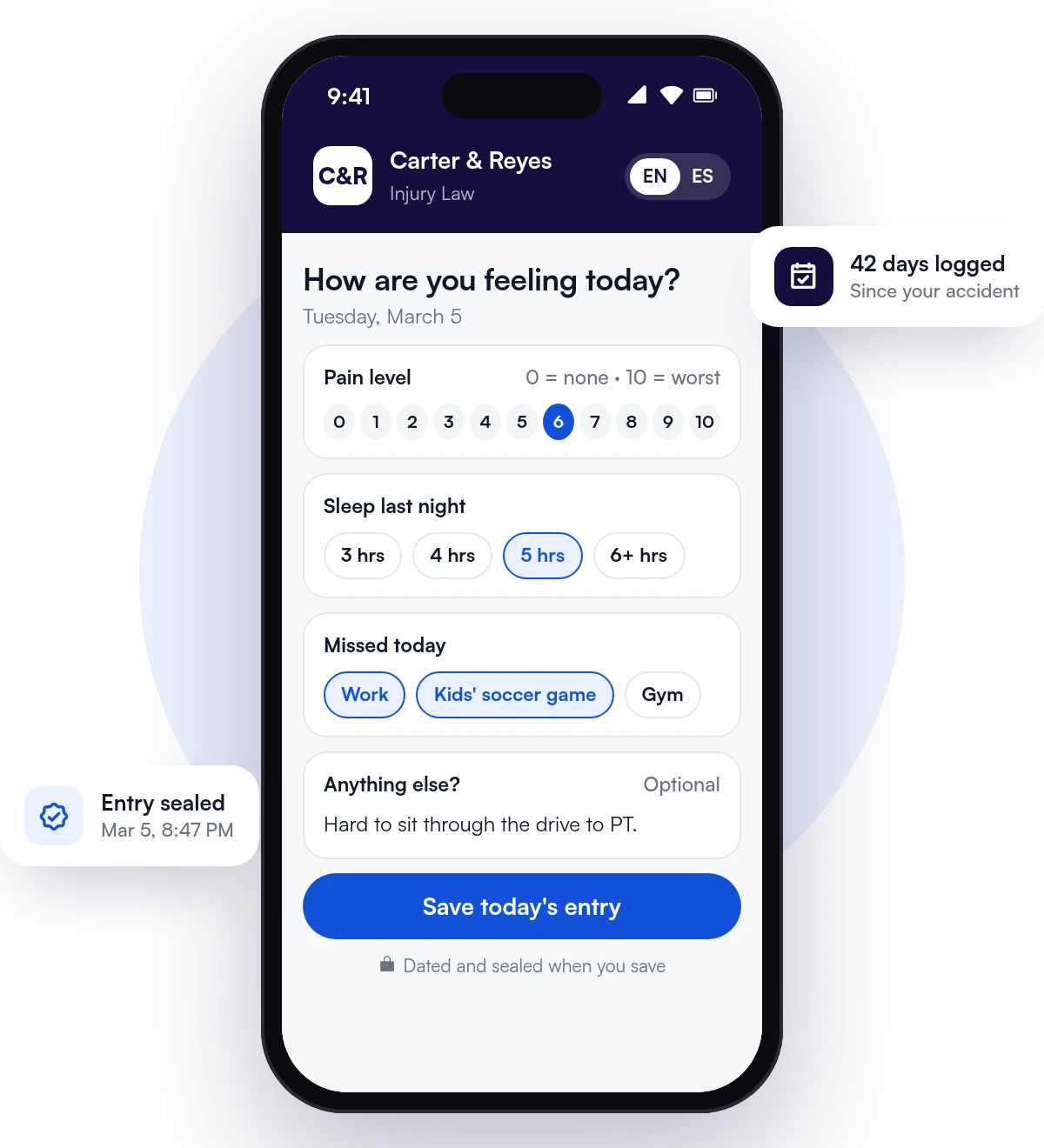
Clients log how they're feeling each day. The assistant asks simple, neutral questions, and attorneys watch the record build, ready for the demand or the deposition.
Each journal entry is encrypted, signed on the client's phone, dated and chained to the entries before it the moment the client saves it. Every hour the chains are sealed with a signature from a hardware security module, and entries are kept in storage nobody, including us, can alter or delete for five years, so a changed, removed or inserted entry shows.
Reminders before appointments and follow-ups afterward keep clients in treatment, and your team knows the moment a client falls behind.
Ask the right questions for every case type, automatically, with playbooks for auto, premises, trucking and other cases.
When clients miss appointments or stop going to physical therapy, defense counsel argues the injuries weren't serious. Firms often only find out when the medical records arrive, too late to fix it.
Whether and how to use the recovery record in a case remains your attorneys' decision.